
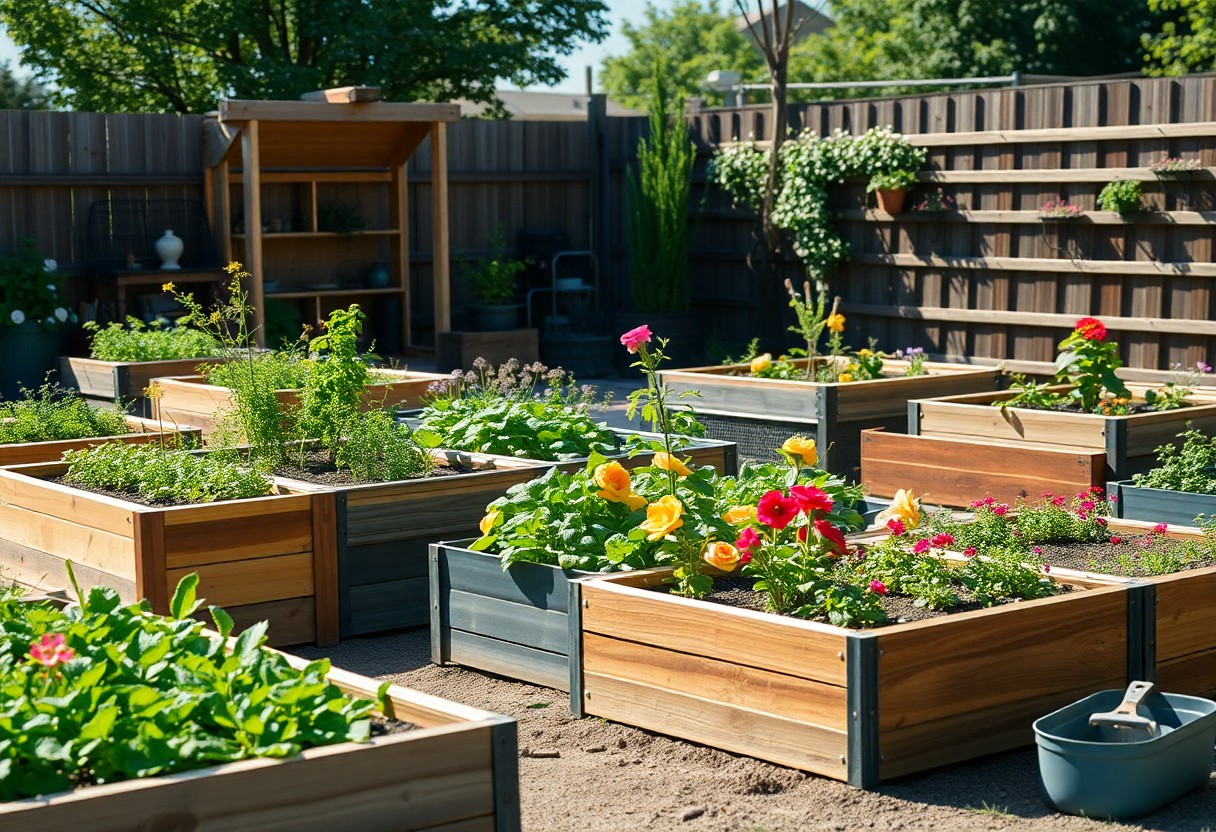
It’s time to transform your outdoor space with a DIY raised bed garden that you can easily construct this weekend. Not only will these beds enhance your garden’s aesthetics, but they also provide excellent drainage and soil control, giving your plants a healthy environment to thrive. With a variety of designs and materials to choose from, you can create a customized growing area that fits your needs. Follow this guide to discover simple, effective designs that will elevate your gardening experience and help you enjoy fresh, home-grown vegetables in no time!
Benefits of Raised Bed Gardening
The advantages of raised bed gardening are numerous, making it a popular choice among gardeners. Raised beds not only enhance your gardening experience but also lead to healthier plants, more efficient gardening practices, and a delightful outdoor project that you can complete in a weekend. You’ll find that raised beds promote better organization, easier access, and improved aesthetics in your garden space.
Improved Soil Drainage
Gardening in raised beds significantly improves soil drainage, allowing excess water to escape easily and preventing the roots of your plants from sitting in soggy soil. This enhanced drainage is particularly beneficial for areas with heavy clay soils, which can become compacted and waterlogged. By elevating your planting area, you create a healthier environment for roots to thrive.
Enhanced Plant Growth
Soil quality plays a vital role in the success of your garden, and raised beds allow you to customize the soil mix to suit the specific needs of your plants. Growth in raised beds often outpaces traditional ground gardening due to better aeration, improved drainage, and warmer soil temperatures. As a result, your plants can access nutrients more effectively, and with less competition from weeds. Higher plant density and targeted care in raised beds lead to better yields, providing you with abundant and thriving produce throughout the growing season.
Materials Needed for Raised Bed Construction
Even if you’re a novice gardener, gathering the right materials is vital for your weekend project. You will need quality wood or alternative materials, screws or nails, landscaping fabric, and soil. Don’t forget to have gloves and a protective cover for your garden bed to shield it from pests and extreme weather. With the right supplies, you can build a sturdy and beautiful raised bed for your garden.
Wood Options and Alternatives
Wood is the traditional choice for raised beds, with options like cedar, redwood, and treated lumber offering durability. If you’d prefer alternatives, consider using old pallets, composite materials, or even concrete blocks. Each option has its own benefits, whether it’s cost, longevity, or aesthetics, allowing you to tailor your raised bed to suit your gardening needs and style.
Tools Required for Building
With the right tools, constructing your raised bed will be an efficient and smooth process. Basic tools you’ll need include a saw, drill, measuring tape, and level. Additional items such as a hammer and square can also be beneficial for achieving precise cuts and corners.
Needed tools can vary based on your design but ensure you have a cordless drill for easy assembly, as well as a saw to make clean cuts. A measuring tape is key for ensuring accuracy in your dimensions, while a level will help you create a perfectly flat surface for your beds. Having protective gloves will also keep you safe from splinters and injuries, making your building experience more enjoyable.
Basic Raised Bed Design
Assuming you want a simple and effective way to start your gardening adventure, a basic raised bed design can be your perfect solution. These beds are not only easy to build but also enhance soil drainage and warmth, promoting healthier plant growth. By keeping your garden elevated, you can avoid soil compaction and enjoy a more accessible gardening experience.
Standard Rectangular Beds
Between the various designs, standard rectangular beds are a popular choice for their practicality and ease of construction. Typically measuring 4 feet by 8 feet, these beds allow for efficient planting and make it simple to reach all areas without stepping on the soil. You can customize the height based on your needs, creating a comfortable gardening experience.
Elevated Bed Options
To elevate your gardening experience, consider building elevated beds that stand off the ground. These designs can be particularly beneficial for those with limited mobility or space constraints, allowing for easier access without bending down. Elevated beds can also offer better drainage, which is imperative for growing a variety of plants.
In fact, elevated beds can provide a host of benefits beyond accessibility. They reduce common garden pests, improve air circulation around plant roots, and can even create a stylized look for your yard. By raising the soil level, you can achieve optimal drainage, keeping your plants healthy and thriving. Just be sure to use non-toxic materials to keep your food safe and consider adding a protective edge to avoid injuries while gardening.
Creative Raised Bed Designs
For a unique twist on traditional gardening, creative raised bed designs can transform your outdoor space into a stunning focal point. By thinking outside the box, you can maximize your gardening potential while adding visual interest to your yard. From unconventional shapes to layered structures, these designs not only enhance functionality but also allow your personality to shine through in your garden.
Corner Planters
On a small lot or in a tight corner, corner planters make the most out of every square inch. These raised beds fit snugly into the corners of your garden, providing ample growing space without overwhelming the area. You can mix and match different plants to create a vibrant display while effectively utilizing otherwise wasted space.
Tiered Systems
Before plunging into tiered raised bed systems, it’s important to understand their benefits. These structures offer an appealing way to create height in your garden, making it easier to grow a variety of vegetables or flowers. Tiered systems can improve drainage and access, preventing overcrowding while allowing you to cultivate multiple plant types at different levels. This design can also create a striking visual effect, enhancing your outdoor aesthetics.
Planters in a tiered system allow you to grow various plants while maximizing your gardening space efficiently. You can customize the height of each tier based on your planting needs, ensuring that sunlight reaches every level. Additionally, tiered systems make watering and maintenance easier, as you can reach plants without bending over excessively. When installed correctly, these planters not only enhance your gardening experience but also contribute positively to your landscape. Embrace the creativity of tiered raised beds to cultivate a truly remarkable garden!
Enhancing Your Raised Bed Garden
Your raised bed garden can be transformed into a vibrant and functional oasis by incorporating various enhancing features. From vertical gardening solutions that save space and add interest to companion planting strategies that improve plant health and yield, enhancing your garden allows you to maximize your growing potential while creating an inviting space. Consider these enhancements for a flourishing and visually appealing garden this weekend.
Adding Vertical Elements
Any garden can benefit from vertical elements that offer a stunning visual appeal and functional advantages. Incorporating trellises, garden arches, or wall-mounted planters can help you utilize vertical space, allowing you to grow climbing plants like peas, beans, or cucumbers while keeping your beds organized and accessible. This not only adds height but also encourages air circulation, which is imperative for plant health.
Companion Planting Strategies
Adding companion planting strategies to your raised bed garden can significantly impact your garden’s success. This technique involves pairing plants that can mutually benefit one another by repelling pests, enhancing growth, or improving flavor. By selecting compatible plants, you can create a harmonious ecosystem where each plant thrives, leading to a bountiful harvest.
Indeed, using companion planting strategies can greatly enhance your raised bed garden. For example, planting marigolds alongside vegetables can deter harmful insects, while growing basil next to tomatoes may improve their flavor and growth rate. Additionally, grouping nitrogen-fixing plants, like beans, with those requiring extra nitrogen, such as corn, can lead to healthier crops. When you thoughtfully combine plants based on their complementary characteristics, you’ll promote biodiversity and create a garden that works together effortlessly.
Maintenance Tips for Raised Bed Gardens
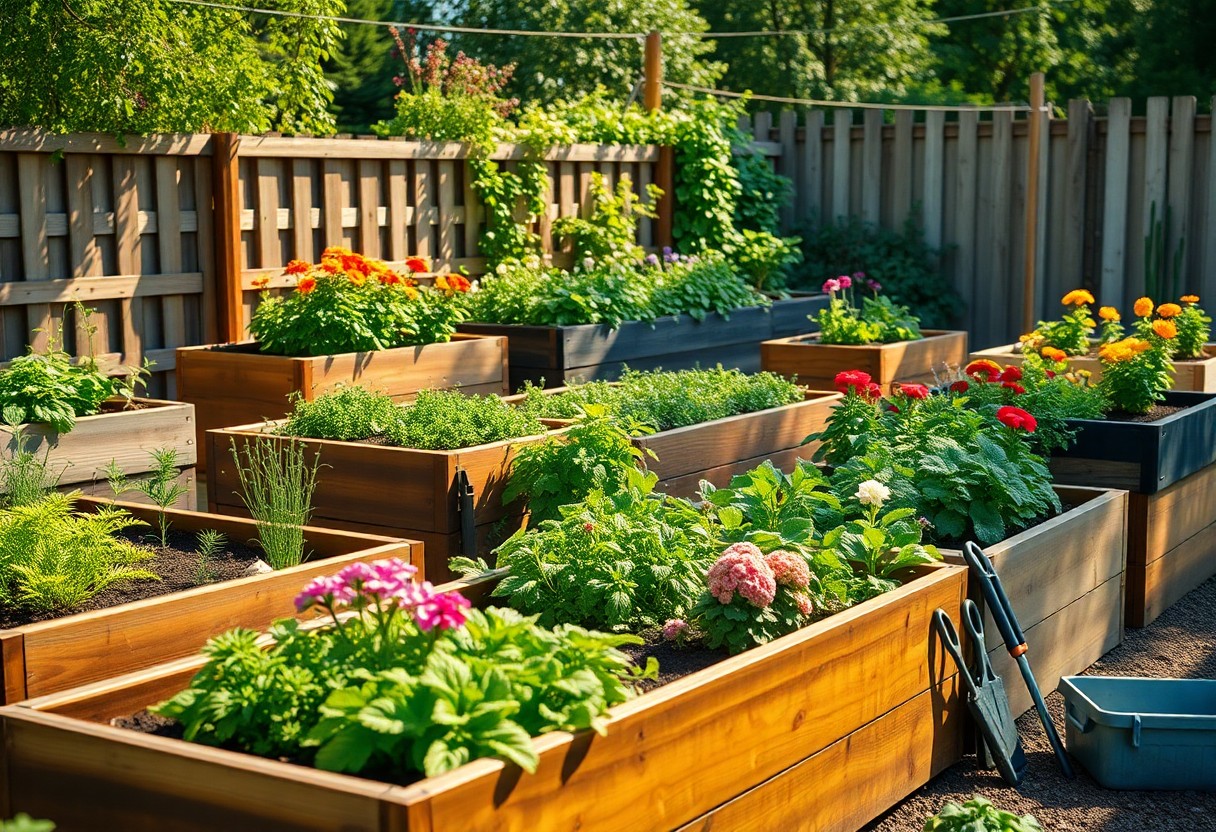
Once again, maintaining your raised bed garden is vital for a thriving ecosystem. Regular care ensures healthy plants and bountiful harvests. Here are some imperative maintenance tips:
- Water consistently to prevent drought stress.
- Mulch to retain moisture and suppress weeds.
- Rotate crops each season to maintain soil health.
- Inspect regularly for signs of pests and diseases.
Perceiving the long-term health of your garden requires your commitment to these practices.
Soil Management
Against the backdrop of your raised bed, healthy soil is the foundation of your garden’s success. Regularly test your soil for pH and nutrient levels, and amend it with organic matter like compost or well-rotted manure to enhance its fertility.
Pest Control Solutions
Below, protecting your raised bed garden from pests is imperative to ensure a vigorous growth environment. You can employ various strategies, such as introducing beneficial insects, using organic pesticides, and establishing physical barriers like row covers.
But you must be proactive in addressing pest issues to maintain your garden’s health. It’s important to identify harmful pests quickly and act decisively, as they can wreak havoc on your plants. Employing integrated pest management (IPM) can mitigate infestations by introducing beneficial insects like ladybugs and lacewings that prey on destructive species. Additionally, using natural solutions like neem oil can deter common garden pests. Always inspect your plants regularly, as early detection leads to less significant damage and promotes a thriving and resilient garden ecosystem.
Final Words
With these considerations, you can create a DIY raised bed garden that not only complements your outdoor space but also enhances your gardening experience. Choose materials that suit your style and budget, and customize your design to suit the plants you wish to grow. This weekend, take the opportunity to design and build your perfect raised bed, paving the way for bountiful harvests and enjoyable gardening moments for years to come.