
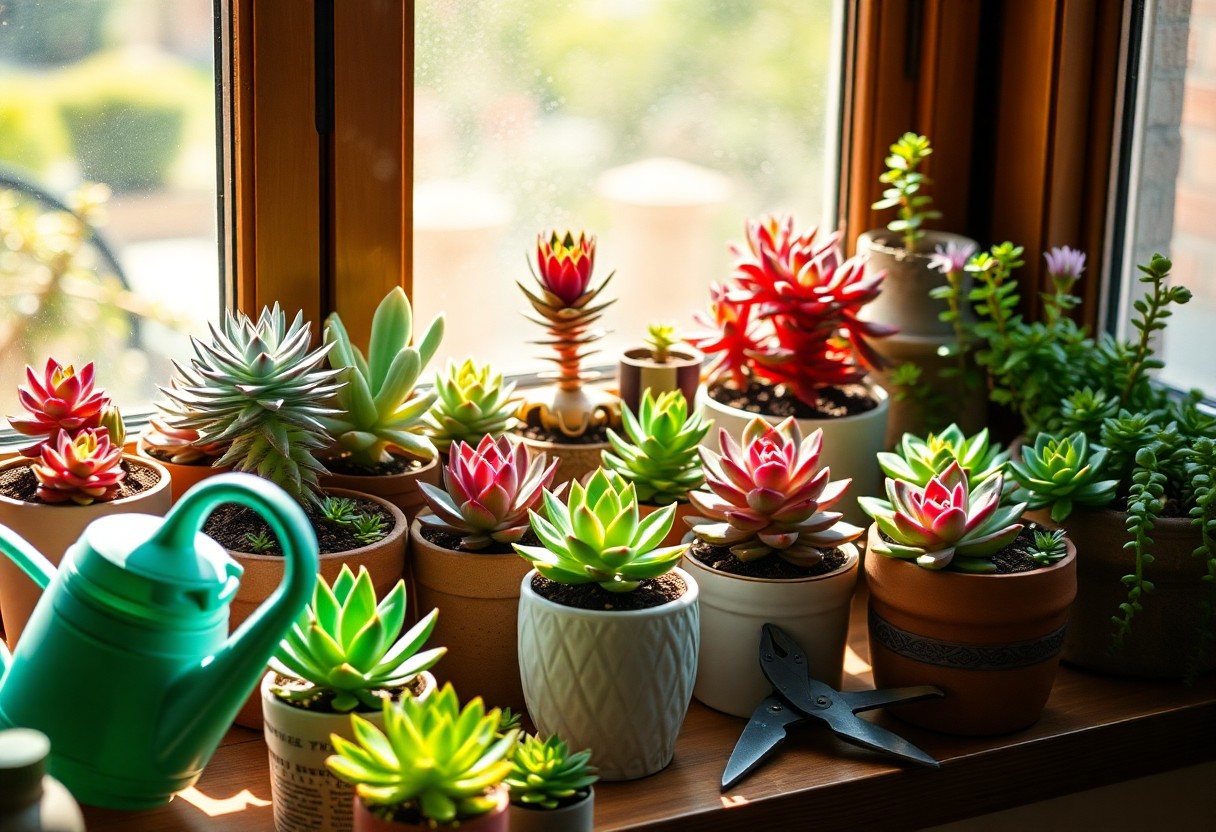
Just starting your journey with succulents? You’ll find these charming plants not only beautiful but also low-maintenance and perfect for your space. In this guide, you’ll discover crucial care techniques, effective propagation methods, and inspiring styling tips to enhance your home. You can easily cultivate a vibrant, healthy collection with the right knowledge, transforming your living area into a lush oasis. Dive in to learn how to keep your succulents thriving and stylish!
Understanding Succulents
Among the most popular houseplants, succulents are known for their unique ability to store water in their thick, fleshy leaves. Native to arid regions, these resilient plants come in various shapes, sizes, and colors, making them an attractive option for any home. Their adaptability ensures that even beginners can successfully grow and care for them, fostering a delightful gardening experience.
What Are Succulents?
Above all, succulents are plants characterized by their ability to store water, helping them thrive in dry environments. They come from diverse families and species, showcasing a vast array of forms. This adaptability enables you to discover numerous ways to incorporate them into your life and living spaces.
Popular Succulent Varieties
Varieties of succulents are extensive, but some of the most popular include *Echeveria*, *Sedum*, *Aloe Vera*, and *Haworthia*. Each offers unique characteristics, eye-catching colors, and varying care requirements. You can find *Echeveria*’s rosette form particularly appealing, while *Aloe Vera* is admired for its medicinal properties. Moreover, *Sedum* species are often used as ground covers due to their hardiness and low maintenance needs, making them ideal for beginners.
Hence, choosing the right variety for your space can enhance your gardening experience. Consider succulents like *Jade Plant* and *Paddle Plant*, which are not only visually stunning but also easy to propagate. However, be aware that certain varieties, like *Aloe Vera*, may be mildly toxic to pets, so always check if you have furry friends at home. Ultimately, their delightful shapes and colors contribute to the aesthetics of your space while requiring minimal upkeep.
Essential Care Tips
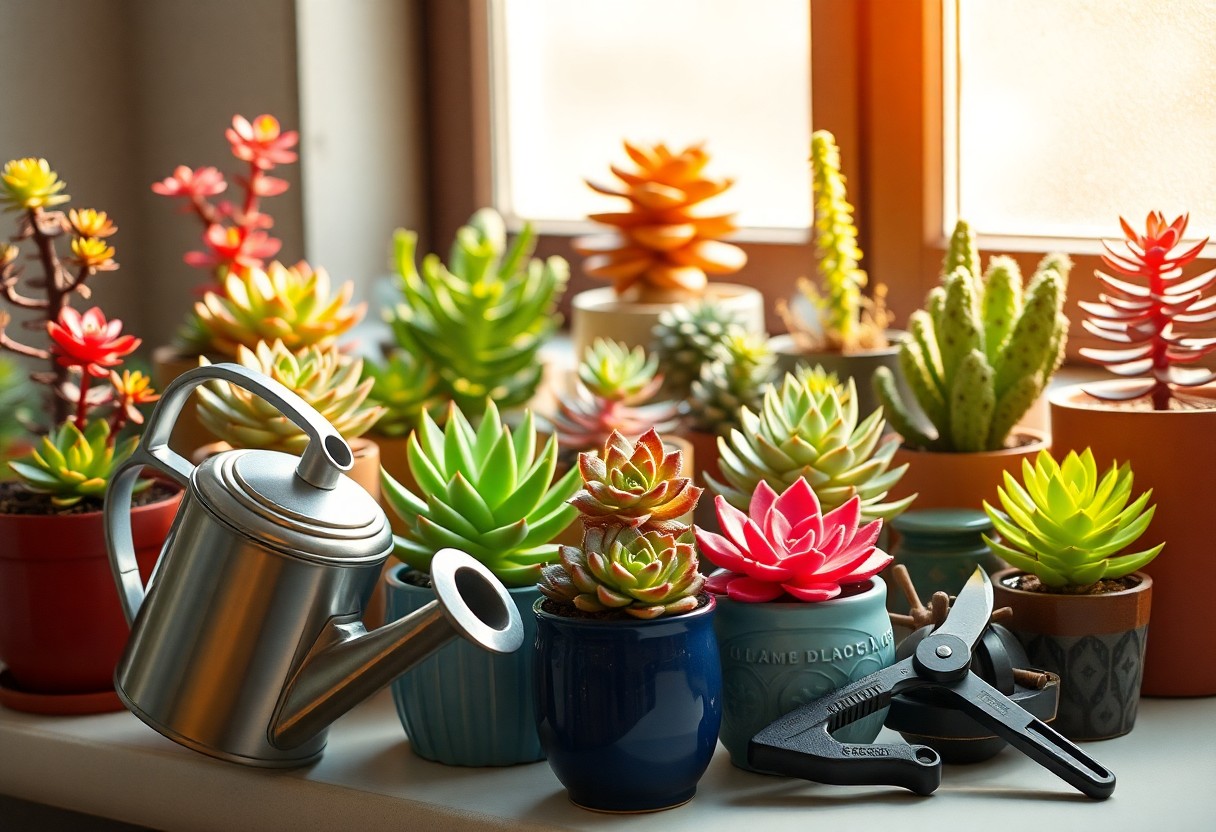
Any succulent enthusiast knows that proper care is necessary for thriving plants. To ensure your succulents remain healthy, follow these care tips:
- Use well-draining soil.
- Avoid overwatering.
- Provide adequate sunlight.
- Fertilize sparingly.
- Watch for pests.
Any care regimen you establish will promote the vibrant growth of your succulents.
Watering Guidelines
Watering your succulents properly is key to their health. You should allow the soil to dry out completely between watering sessions, ensuring that you only give them water when necessary. Overwatering can lead to root rot, while underwatering can cause wilting. For best results, water deeply but infrequently.
Light Requirements
About providing the right amount of light, your succulents will flourish when given the appropriate exposure. Position your plants where they can receive at least 6 hours of bright, indirect sunlight daily. Direct sunlight can be damaging, particularly during the hottest parts of the day, leading to browning or sunburn on the leaves.
Considering their light requirements, it’s important to monitor how much light your succulents receive throughout the day. Too little light can inhibit growth and lead to stretching, where plants become leggy as they reach towards the light source. On the other hand, excessive direct sunlight can cause leaf burn and damage, making it vital to strike a balance. Customize your plant’s location depending on the seasons to ensure they thrive.
Soil and Potting
Some vital factors contribute to the health of your succulents, and proper soil and potting techniques play a significant role. The right soil composition will provide good drainage and aeration, ensuring your plants thrive without developing root rot. Following these guidelines will set you and your succulent garden up for success.
Choosing the Right Soil
Soil type matters greatly for succulents. You should aim for a well-draining mix, preferably a cactus or succulent-specific blend that typically includes sand, perlite, or pumice. Avoid regular potting soil, as it retains too much moisture, which can lead to root problems in your succulents. Opting for the right soil will help create an optimal environment for your plants.
Potting Techniques
Soil choice isn’t the only aspect; potting techniques also influence your succulents’ overall health. You need to use containers with drainage holes to allow excess water to escape, as this prevents water accumulation at the base. Fill the pot with your selected soil, leaving enough space to accommodate the root system without crowding. Once potted, give your succulent a good soak, allowing the water to drain completely. This method provides a solid foundation for strong growth.
This careful approach to potting will foster robust, healthy succulents. When repotting, gently remove your plant from its old container and loosen any tightly bound roots. Place it in the new pot, adjusting soil levels as needed to ensure that the base of the leaves sits at the soil level, not below. This practice not only helps with moisture retention but also encourages proper air circulation around the roots. Following these techniques will enhance the vitality and longevity of your succulent collection.
Propagation Methods
Once again, propagating succulents can be a rewarding experience that allows you to expand your collection without breaking the bank. These hardy plants are known for their ability to multiply through various methods. Understanding these propagation methods not only enhances your plant care skills but also promotes a deeper bond with your succulents. From leaf cuttings to offsets, each technique offers a unique way to create new plants and ensure thriving growth.
Leaf Cuttings
Beside being one of the simplest methods, leaf cuttings allow you to propagate your succulents easily. You start by removing a healthy leaf from the plant and placing it on well-draining soil. Over time, roots will develop from the base of the leaf, eventually leading to new growth. It’s imperative to let the cut leaf callous over before planting to reduce the risk of rot and ensure successful propagation.
Offsets and Division
Around most succulents, you’ll find offsets, which are small plants that grow on the side of the parent. This method of propagation is straightforward, as you can gently separate these offsets from the main plant. With care, you simply replant them in their own pot with fresh soil. This not only promotes healthy growth but also encourages your main plant to thrive. Always ensure that the offsets have roots before replanting to increase your success rate.
Cuttings taken from offsets and division can yield impressive results. When performing this method, focus on the roots: they should be well-established for a successful transplant. If any roots are damaged, replanting may not be successful, so handle with care. It’s best to use a well-draining soil mix to avoid saturation and root rot. Keeping the new plants in indirect sunlight until they acclimate will also promote healthy development, making this propagation method not only effective but also rewarding.
Styling Your Space
Your succulents can enhance the aesthetic of any room by adding a touch of greenery and life. Whether you prefer minimalist displays or vibrant arrangements, these hardy plants bring personality to your space. Consider unique planters or incorporating them into existing decor to create a cohesive look. Play with heights, colors, and textures to make your succulent collection truly stand out.
Indoor Succulent Arrangements
Your indoor arrangements should reflect your style while ensuring your succulents thrive. Group different shapes and sizes in attractive containers, and place them near bright, indirect sunlight. Use multi-tiered shelves or floating ledges to create a visually appealing display that invites curiosity and creativity into your home.
Outdoor Succulent Gardens
Beside bringing life and beauty to your outdoor space, succulents are highly adaptable and low-maintenance, making them perfect for gardens. You can create vibrant landscapes with a variety of textures and colors by combining different succulents in your garden. Always ensure your garden has well-draining soil and plenty of sunlight. Incorporate pathways or decorative stones to enhance visual interest while allowing for proper drainage. Watering sparingly is necessary, as succulents thrive on little moisture. Enjoy the ease of caring for these plants while showcasing your creativity in your outdoor space!
Succulent gardens not only provide a stunning visual element but also require minimal upkeep, giving you more time to relax and enjoy your outdoor oasis. By incorporating unique planters and arranging your succulents artistically, you can create focal points that highlight their natural beauty. Be cautious not to overcrowd them, as they need airflow to prevent rot. Utilize native plants and rocks to create a sustainable environment, ensuring your succulent garden flourishes with beauty and health.
Common Issues and Solutions
Unlike many houseplants, succulents are relatively low-maintenance; however, they can still encounter a few common issues. Problems such as pests, diseases, and improper watering can affect their health. By being vigilant and familiarizing yourself with these challenges, you can quickly implement solutions to keep your succulents thriving.
Pests and Diseases
Among the most common pests that may invade your succulents are mealybugs, aphids, and spider mites. These pests feed on the plant’s sap, leading to stunted growth and a weakened plant. Regularly inspecting your plants and using insecticidal soap or neem oil can help you keep these unwanted guests at bay.
Overwatering and Underwatering
Below the surface, the balance between overwatering and underwatering is critical for your succulent’s health. Both extremes can lead to significant problems, from root rot to dehydration.
In fact, overwatering can lead to decay and ultimately kill your plant, while underwatering can cause leaves to shrivel and drop off. Aim to check the moisture level of the soil before watering; a good rule of thumb is to allow the top 1-2 inches to dry out between waterings. Succulents prefer well-draining soil and a pot with drainage holes to prevent excess water buildup. Your attention to these details will ensure your succulents remain healthy and vibrant.
To Wrap Up
As a reminder, taking care of succulents can be a rewarding experience, perfect for beginners and seasoned plant enthusiasts alike. By understanding their basic care requirements, mastering propagation techniques, and exploring creative styling options, you can enhance your space with these resilient plants. Be patient as you learn what works best for your environment, and enjoy the journey as your succulent collection thrives under your care.